
Tattiana’s Passage to Self-Knowledge
Eugene OneginThis thread traces Tattiana Larina’s movement from inward provincial longing through social transformation to a deliberate final choice.
increasing Bearing strength in each event
 decreasing
Bearing strength in each eventdecreasingThe Solitary Daughter
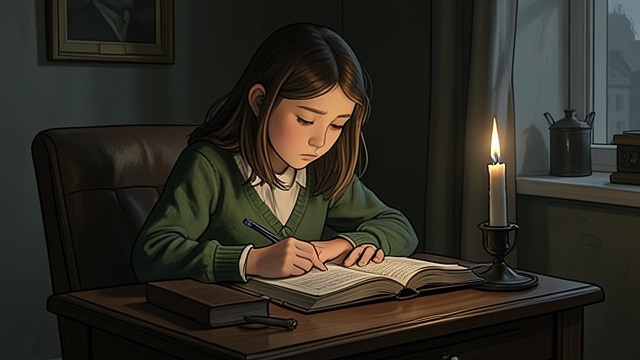
The Solitary Daughter
An inward childhood
Tattiana grows up quiet and contemplative, more drawn to solitude and stories than to the noisy games that delight Olga.
Her inwardness makes her receptive to imagined possibilities, though it also leaves her with few ways to test them against experience.
A mind shaped by reading
Romances give Tattiana a ready vocabulary for passion and destiny. When Eugene appears, she interprets him through the figures and plots she already knows.
Her distinctive imagination becomes both a source of emotional depth and a risk of mistaking literary expectation for knowledge of another person.
A Sudden First Love
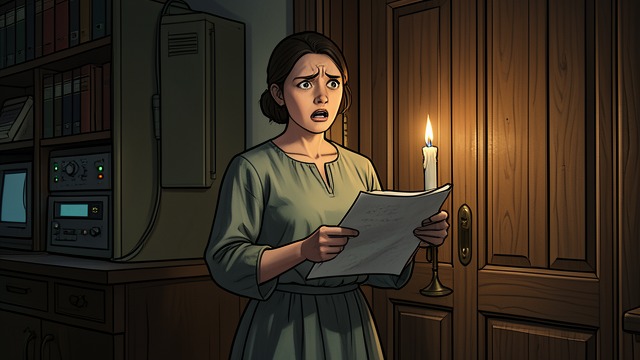
A Sudden First Love
The imagined hero
Tattiana quickly makes Eugene the center of her thoughts. The ordinary rhythms of home and village life become secondary to her expectation of seeing him again.
Her feeling is sincere, but its intensity grows partly from the romantic narratives through which she understands it.
Risk and disclosure
Unable to remain silent, she writes in French and entrusts her confession to Phillippevna. The letter exposes her to rejection, yet expresses a courage absent from Eugene’s practiced social world.
Her choice begins a painful education in the difference between emotional certainty and mutual love.
After the Rejection
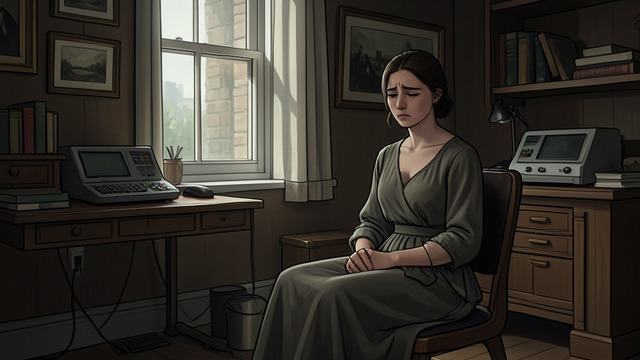
After the Rejection
A moral lesson
Eugene responds with sympathy but says that he cannot offer the domestic devotion Tattiana hopes for. He warns that his habits would turn marriage into misery.
His honesty prevents a false promise, but it also leaves Tattiana to carry her love without reciprocation.
Private endurance
She becomes subdued and distressed, while the adults around her interpret her suffering as a reason to arrange a marriage.
The episode changes her from a girl who trusts an imagined future into someone forced to confront the limits imposed by another person’s choices.
The Provincial Girl Departs
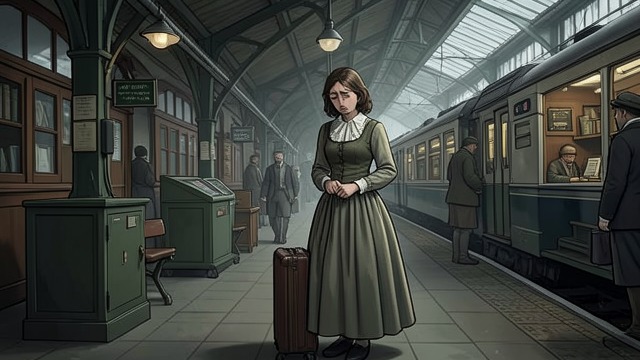
The Provincial Girl Departs
Losses at home
Lensky’s death and Olga’s departure leave Tattiana isolated in the place where her attachment to Eugene began.
She visits Eugene’s abandoned house, studies his books, and begins to question whether he is a singular romantic hero or an imitation of fashionable literary poses.
A forced change of world
When her mother decides to take her to Moscow, Tattiana grieves the countryside and the freedom of her former life.
The journey exposes her to a society that will reshape her public identity without erasing the private history she carries.
A Principled Ending
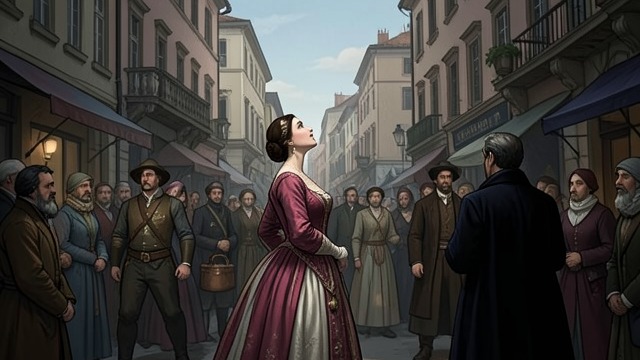
A Principled Ending
Love returns in altered form
In St. Petersburg, Tattiana recognizes the man she once loved beneath the composure of a celebrated society woman. Eugene now pursues her with an urgency he did not show in the countryside.
She acknowledges that her feelings have not simply vanished, but refuses to treat them as permission to break her commitment.
Choice and cost
Tattiana insists that she is another man’s wife and will remain faithful. Her decision is neither indifference nor a denial of past love.
The ending gives her agency through a boundary she chooses to uphold, even as it leaves Eugene facing the cost of his belated transformation.
before Eugene arrives in the district
after Tattiana meets Eugene at the Larina home
in the garden after Eugene reads her letter
after Olga’s marriage and Lensky’s death
near the end after Eugene’s final visit
